You've Lost Your Third Place — And It's Quietly Wrecking Your Social Life
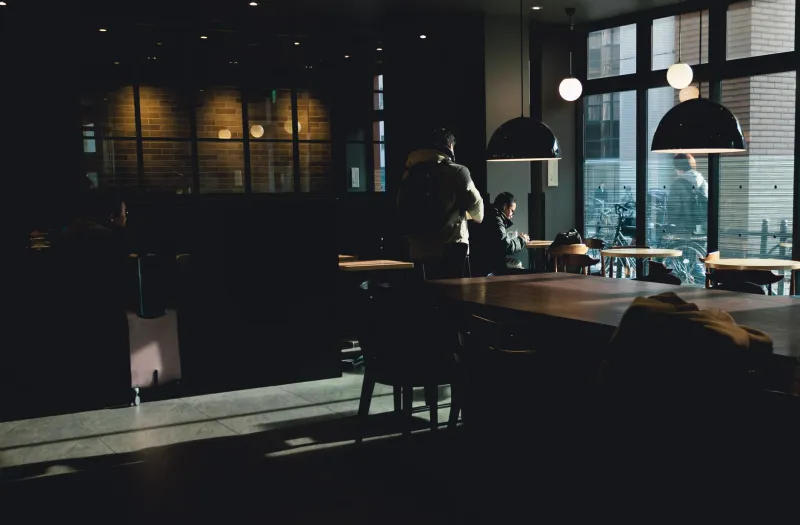
Sociologist Ray Oldenburg coined the term "third place" back in 1989, and the concept is pretty simple: beyond home (your first place) and work (your second place), healthy communities have always depended on a third space where people gather informally, regularly, and without an agenda. The barbershop. The bowling alley. The local diner where the waitstaff knows your order. The VFW hall. The church basement after Sunday service.
For most of American history, these spaces were so embedded in daily life that nobody had to think about them. You just ended up there. And while you were there, you ended up talking to people. And over time, some of those people became your people.
Now ask yourself honestly: where is your third place?
If you're drawing a blank, you're not alone — and you're not imagining it.
What Happened to All the Third Places
The decline of third spaces in America didn't happen overnight, and it wasn't one thing. It was a slow accumulation of economic, cultural, and logistical shifts that, taken together, quietly dismantled the infrastructure of casual community life.
Chain retail replaced independent local businesses. Suburban sprawl made walkability a luxury rather than a given. The cost of running a small gathering space — a bar, a community room, a neighborhood rec center — became increasingly difficult to sustain. Religious participation dropped significantly across nearly every denomination. Civic organizations like the Elks, the Moose Lodge, and the Rotary Club shed members for decades.
And then, of course, came the screen. Not just smartphones — though those accelerated everything — but the broader cultural shift toward consuming entertainment at home. Why go to the video store when you can stream? Why hit the bar when you can have a drink on your couch? Convenience, again and again, won out over community.
The pandemic finished off a lot of what was left. Bars closed. Community centers shut their doors. The habit of showing up somewhere just to be around other people atrophied further, and for many adults, it never really came back.
Why This Hits Adults Especially Hard
Kids have school. Teenagers have school plus a whole ecosystem of structured social activity. Even retirees often have senior centers, church communities, or grandkids who pull them into social orbit.
Working-age adults? Their social infrastructure is the thinnest of all.
Work provides colleagues, but colleagues aren't automatically friends — especially in an era of remote and hybrid schedules where you might not share physical space with coworkers at all. Home provides comfort, but comfort and connection aren't the same thing. And without a reliable third space, there's no organic, low-pressure environment where friendships can just... develop.
That's the piece most people miss. Friendships don't usually form through grand gestures or intentional "let's be friends" conversations. They form through repeated, low-stakes exposure over time. The guy you nod to every week at the gym. The woman who always ends up next to you at trivia night. The neighbor you run into at the same coffee shop every Saturday morning. Remove the context, and those connections never get the chance to root.
For adults who've moved to a new city, gone through a divorce, changed careers, or simply drifted away from their old social circles, the absence of a third place isn't a minor inconvenience. It's a genuine barrier to building any kind of community at all.
The Loneliness Numbers Are Real
This isn't anecdotal. According to research from the U.S. Surgeon General's office, loneliness in America has reached epidemic levels — with nearly half of adults reporting measurable feelings of isolation. The numbers are particularly striking among adults between 30 and 49, a demographic that tends to be time-poor, geographically mobile, and increasingly disconnected from the civic and religious institutions that once anchored community life.
Loneliness, it turns out, isn't just uncomfortable. It's associated with a host of serious health outcomes, from elevated blood pressure to cognitive decline. The Surgeon General's 2023 advisory on social disconnection drew comparisons to smoking in terms of health impact. That's not hyperbole — that's epidemiology.
The point isn't to be alarmist. It's to make clear that the struggle so many adults feel when it comes to making friends isn't a personal shortcoming. It's a response to a real, documented, structural gap in how American community life is organized right now.
Why Online Communities Are Actually Filling a Real Need
Here's where things get interesting — and where a lot of the cultural conversation gets it wrong.
There's a persistent narrative that online community is a pale substitute for real connection. And in some contexts, that's fair. Scrolling through social media feeds, collecting followers, broadcasting into the void — none of that replicates the experience of being in a room with people who are glad you showed up.
But that's not the only thing the internet offers. Platforms designed specifically around shared interest, mutual discovery, and ongoing relationship-building — the kind of intentional social infrastructure that Adult Friend Clubs is built around — function much more like a third place than a social media feed does.
Think about what a third place actually provides: a consistent context, a shared identity, low-pressure interaction over time, and the opportunity to go deeper with the people who keep showing up. A well-designed online community can offer all of that, particularly for adults who lack geographic access to the physical spaces that used to serve this function.
For someone who just moved to a new city, lives in a rural area, works unconventional hours, or simply hasn't found a local group that fits — an online community isn't a consolation prize. It's often the most realistic path to finding people who actually get them.
Rebuilding the Third Place on Your Own Terms
The practical takeaway here isn't to mourn what's been lost — it's to be intentional about replacing it.
That might mean finding or creating a recurring local gathering, even a small one. A standing Sunday hike. A monthly board game night. A book club that actually meets. The format matters less than the regularity, because regularity is what builds familiarity, and familiarity is the soil that friendships grow in.
It also means taking online community seriously as a real option, not a fallback. Joining a platform like Adult Friend Clubs with the same openness and consistency you'd bring to showing up at a neighborhood bar every Friday — that's not a digital workaround. That's building your third place where your people actually are.
The old third places aren't coming back, at least not in the forms they used to take. But the human need they served — to belong somewhere beyond your couch and your cubicle — hasn't gone anywhere. It's just waiting for you to find a new address.