Read the Vibe: Your Real Guide to Navigating New Lifestyle Gatherings Like a Pro
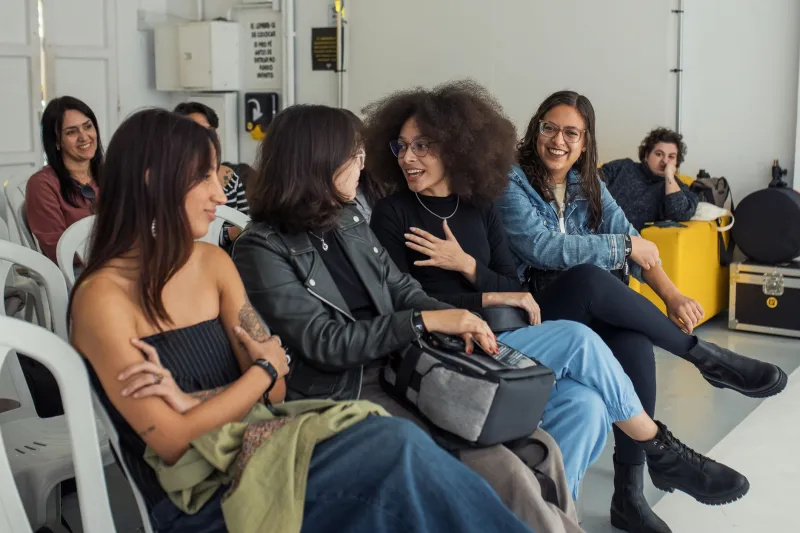
Here's something nobody tells you before your first — or fifth, or fifteenth — new lifestyle event: the etiquette guide only gets you so far.
You can memorize all the surface-level rules. Ask before touching. Respect the host's space. Don't be that person who talks over everyone. Good. Solid foundation. But the thing that actually determines whether you leave an unfamiliar gathering feeling connected and welcomed, or like you spent three hours orbiting the edges without ever really landing? That's something subtler. It's social intelligence — the ability to read what's actually happening in a room and respond to what's really there, not just what you expected to find.
This is that guide.
Walk In as an Observer First
The single most common mistake people make at new lifestyle events is arriving with an agenda and trying to execute it before they've taken stock of the room.
You walk in, you're a little nervous, you want to make the nervousness stop, so you immediately start performing: introducing yourself everywhere, making jokes, filling silence, projecting confidence you may or may not actually feel. It's understandable. It's also counterproductive.
The first ten or fifteen minutes of any new gathering are best spent in low-key observation mode. Get a drink. Find a comfortable spot near the edge of the action. And just... look around. What's the energy level? Is this a loud, high-energy crowd or more of a quiet, intimate vibe? Are people clustered in established groups or moving fluidly? Is there a host or anchor figure who seems to be managing the social flow? Are there clear conversational hubs or is the space more dispersed?
None of this takes long. But it gives you information that will make every interaction you have afterward more calibrated and more effective.
Understand That Every Community Has a History You Don't Know Yet
Lifestyle communities, especially ones that have been running for a while, have layers. There are inside jokes, shared history, established relationships — some warm, some complicated — and unspoken norms that everyone in the room understands implicitly because they've been there for dozens of events before this one.
You haven't. And that's fine. But it's important to hold that awareness gently rather than ignoring it.
When you walk into a room where most people know each other and you're new, there's a natural social hierarchy at play. That doesn't mean you're unwelcome — far from it, in most well-run lifestyle communities. But it does mean that the people who've been around longest have social capital you haven't earned yet, and trying to skip that process by immediately positioning yourself as an equal or, worse, as a leader or authority, tends to land badly.
The move is humility without self-deprecation. Be genuinely curious about the community's history. Ask questions that signal you understand this world existed before you arrived. "How long has this group been meeting?" "What's the origin story of this event?" These aren't just conversation starters — they're signals that you respect what's already been built.
Learn the Difference Between Warmth and Access
One of the subtler social dynamics in lifestyle communities is the distinction between people being warm toward you and people granting you deeper access.
A lot of newcomers misread warmth as an invitation to fast-track intimacy — emotional or otherwise. Someone is friendly, engaged, maybe even flirtatious, and the instinct is to lean all the way in immediately. But warmth is often just warmth. It's hospitality. It's community members being good hosts. It doesn't necessarily mean that person is ready to be your new best friend or closest confidant.
Actual access — the kind where someone starts sharing real things, making real plans, bringing you into their inner circle — tends to come slower, and it's earned through consistency more than chemistry. Showing up to multiple events. Following through on what you say you'll do. Being reliably good company without being demanding. Being the kind of person others feel safe around.
Patience here isn't passive. It's strategic. The people who become genuinely embedded in lifestyle communities almost always describe a gradual process, not an overnight one.
Active Listening Is Your Real Superpower
If there's one skill that separates people who thrive in new social environments from people who struggle, it's active listening — and it's shockingly rare.
Most people at social events are half-listening while they wait for their turn to speak, or scanning the room while someone talks to them, or formulating their response before the other person has finished their thought. This is normal human behavior, and most people are doing it to you too.
Which means that when you actually listen — fully, attentively, with follow-up questions that demonstrate you heard what was just said — it stands out immediately. People feel it. It creates a sense of being genuinely seen, which is one of the most powerful feelings you can give someone in a social space.
Practical ways to do this: make eye contact without being intense about it. Let silences breathe instead of rushing to fill them. Ask follow-up questions that build on what was just shared rather than pivoting to your own experience. Reflect back what you heard occasionally — "So it sounds like you've been part of this community for a while before this particular event started" — to show you were tracking.
This isn't performance. Done well, it's genuine presence. And it's worth more than any clever opener or well-timed joke.
Know When to Contribute and When to Observe
Group dynamics in lifestyle events often have natural rhythms — moments when the energy is open and expansive, and moments when a conversation or activity has a momentum that doesn't need a new voice added to it.
Learning to read those rhythms is an ongoing practice. Some signals that a group conversation is open to new contribution: people are making eye contact around the circle, there are natural pauses, someone directly invites input. Some signals that it's better to observe: people are deep in an emotionally charged exchange, the conversation has a clear two-person dynamic, the group is laughing at something you'd need context to understand.
Contributing when the room isn't ready for it doesn't just fall flat — it can feel intrusive. Observing when the room is clearly inviting participation can read as disinterest or standoffishness. The sweet spot is attentiveness: staying tuned in enough to catch the moment when you're genuinely invited in.
A Word on Respecting Established Pairs and Groups
In lifestyle communities especially, it's worth being thoughtful about dynamics between people who clearly came together or have an established connection. Inserting yourself aggressively into an established pair's conversation, or trying to split someone away from their partner or close friend for private conversation early in the night, tends to register as tone-deaf at best and disrespectful at worst.
This doesn't mean you can't connect with people who came with someone else. It means being aware of the dynamic and including rather than excluding. Pull the chair up. Invite both people into the conversation. Let the natural flow determine whether more focused one-on-one connection develops organically.
The Long Game
Here's the thing about social intelligence in lifestyle communities: it's not a checklist you complete once. It's an ongoing practice of paying attention, adjusting, and getting better at reading the specific culture of each community you encounter.
Every gathering has its own personality. Every community has its own norms. The skills that make you good at navigating them — observation, patience, genuine listening, respect for what already exists — don't expire. They compound. And the more events you attend, the more fluent you become in the kind of social language that makes these spaces genuinely extraordinary.