Why Your Deepest Friendships Probably Won't Come From Work or Your Neighborhood
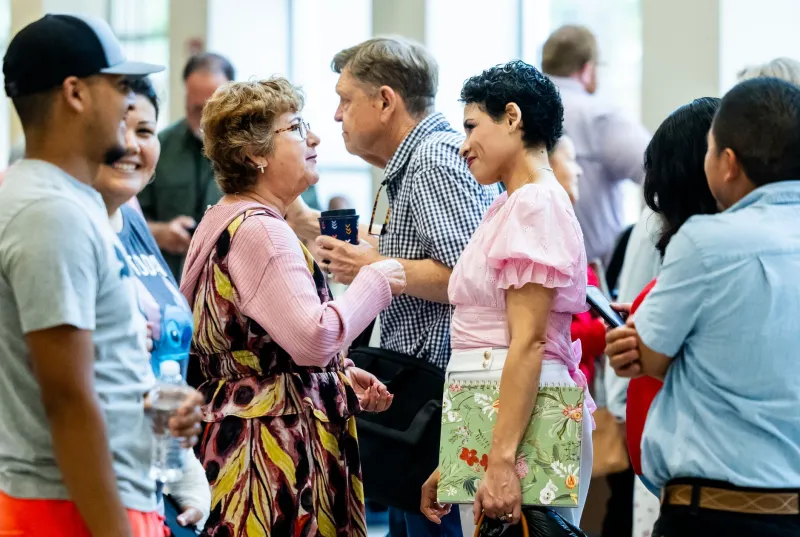
There's a version of adult social life that looks great on paper. You've got coworkers who know your coffee order. A neighbor who waves from the driveway. Maybe a college friend group chat that lights up every few months with memes and zero actual plans. On the surface, it looks like connection. But a lot of Americans will tell you — quietly, usually — that it doesn't feel like it.
So what's actually going on? And why are so many people finding the friendships they've been craving not at happy hour or the neighborhood cookout, but in lifestyle communities, alternative social circles, and intentional gathering spaces they probably never expected to end up in?
The answer has a lot to do with how connection actually works — and why the traditional venues we've been handed were never really designed for it.
The Performance Problem With Conventional Social Spaces
Work friendships come pre-loaded with politics. You're not just being yourself — you're being a version of yourself that's compatible with your job security, your reputation, your professional brand. That's a lot of armor to wear into a conversation. The same goes for neighborhood socializing, where there's an unspoken pressure to be pleasant, presentable, and non-threatening to property values.
Sociologists call this "front stage" behavior — the curated, managed self we put forward in contexts where we feel evaluated. And the problem with front stage behavior is that it's fundamentally incompatible with genuine intimacy. You can't be deeply known by someone you're also performing for.
This isn't a personal failure. It's structural. Traditional social environments weren't designed to foster vulnerability. They were designed to maintain order, productivity, or property norms. Depth was never really the point.
What the Research Actually Says About Adult Friendship
Psychologist Irwin Altman and sociologist Dalmas Taylor developed what's known as Social Penetration Theory back in the 1970s — and it still holds up. Real closeness, they found, develops through gradual self-disclosure. You share something real, the other person meets you there, and the relationship deepens layer by layer.
But that process requires safety. It requires a context where honesty isn't a liability.
More recent research from Brené Brown and others has reinforced the idea that vulnerability is the actual engine of human connection — not proximity, not shared history, not even time. You can sit next to someone for three years at an open-plan office and never once show them who you actually are. Meanwhile, you can meet someone at a lifestyle event, share a real conversation about what you're looking for and what you've left behind, and walk away feeling more seen than you have in years.
The variable isn't how long you've known someone. It's whether the space gave you permission to be honest.
Shared Values Are Doing More Work Than Shared Zip Codes
Here's another thing the research keeps surfacing: we tend to assume proximity breeds connection. But proximity without alignment is just... proximity. You live near people. You work near people. That doesn't mean you have anything real to offer each other.
Shared values, on the other hand, create an immediate shortcut to depth. When you're in a room with people who've made similar choices about how they want to live — who've questioned the default settings on relationships, community, and belonging — you skip a lot of the surface-level small talk. The common ground is already there. You're not starting from scratch.
This is one of the reasons lifestyle communities and alternative social platforms tend to produce friendships that feel unusually solid, unusually fast. It's not magic. It's alignment. When your values are the price of admission rather than something you have to slowly reveal, the whole dynamic shifts.
Intentional Gathering Changes Everything
There's also something to be said for the difference between incidental socializing and intentional gathering. Most traditional social contexts are incidental — you're there for another reason (work, proximity, a shared institution), and socializing is a byproduct. Intentional gathering flips that. You're there specifically to connect. Everyone in the room knows it. Nobody's pretending the real purpose is something else.
That shift in framing matters more than people realize. When connection is the explicit goal, people show up differently. They're more open, more present, more willing to skip the pleasantries and get to something real. Events built around lifestyle communities — whether that's a hosted dinner, a discussion circle, a social mixer — carry that intentionality into the room with them.
At Adult Friend Clubs, that intentionality is baked into the whole premise. This isn't a platform where connection is a happy accident. It's the entire point. And that changes how people engage with each other from the very first interaction.
The Authenticity Gap in American Social Life
It's worth naming something that doesn't get said enough: a lot of Americans are walking around with a significant authenticity gap. There's who they actually are — what they want, how they love, what kind of community they're looking for — and then there's the version of themselves they present in most social contexts. That gap is exhausting to maintain.
Lifestyle communities offer something genuinely different: a context where the gap can close. Where you don't have to hedge your values or soften your edges to be accepted. Where the people around you are, by definition, operating with a higher tolerance for honesty and a lower tolerance for performance.
For a lot of people, that's the first time adult social life has actually felt like something worth showing up for.
Finding Your People Isn't About Finding More People
One of the most persistent myths about loneliness is that it's a quantity problem — that if you just had more people in your life, you'd feel less alone. But most adults who've spent time in the wrong social environments know that's not how it works. You can be surrounded by people and still feel profoundly unseen.
The shift that actually matters is qualitative, not quantitative. It's about finding spaces where depth is possible. Where the structure of the gathering supports honesty rather than performance. Where shared values do the heavy lifting that proximity alone never could.
That's what intentional lifestyle communities are built to do. And it's why, for a growing number of Americans, the friendships that actually stick — the ones that feel like they were worth making — are happening outside the conventional venues they were told to look.
If you've been showing up to the right places and still feeling like something's missing, it might not be you. It might just be the room.